
.
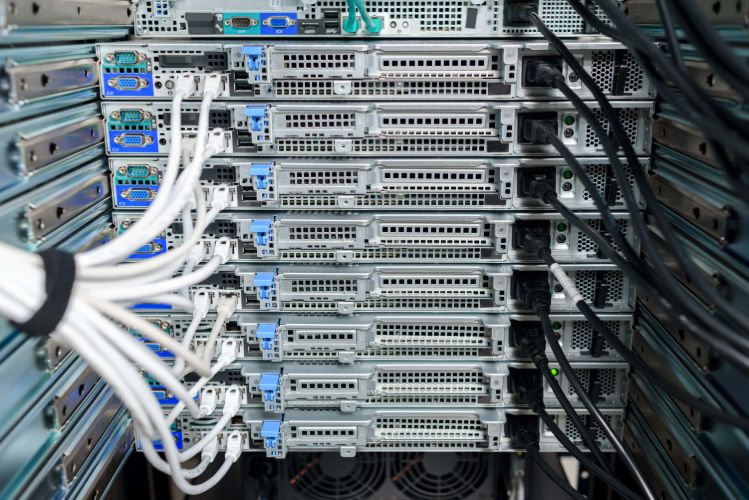
Enterprise Ceph Clustered Storage: Resilient, Sovereign, Scalable
Architecting "Infinite" Storage Fabric for the Sovereign Canadian Cloud
Traditional storage is broken. Whether it's a proprietary SAN that locks you into expensive hardware cycles or a single-node NAS that represents a catastrophic point of failure, legacy storage cannot keep up with the demands of 2026. At LANified! IT Services, we move your business beyond these limitations with Ceph Clustered Storage.
Ceph is a unified, software-defined storage (SDS) platform that turns standard, commodity hardware into a massively distributed, self-healing storage fabric. By eliminating the "Storage Silo," we provide your organization with the same level of resilience and scalability used by global hyperscalers—kept entirely on your own hardware, within your own facility, and under your absolute control.
Why Ceph is the "Final Boss" of Enterprise Storage
- True High Availability: Unlike a traditional SAN with a "dual-controller" limit, a Ceph cluster has no single point of failure. You can lose an entire server node—or even an entire rack—and your data remains online and accessible.
- Massive Horizontal Scaling: Need more space? Don't buy a new SAN. Simply slide another server into the rack. Ceph automatically detects the new hardware and rebalances your data across the entire cluster in the background.
- Unified Protocol Access: One cluster provides Block Storage for Proxmox VMs, S3-Compatible Object Storage for cloud-native apps, and High-Availability NFS/CephFS for shared company files.
- Data Sovereignty: No egress fees. No US-based cloud provider "lock-in." Your data stays in Canada, on your terms, complying with the strictest data residency requirements.
Unified Software-Defined Infrastructure: One Cluster, Every Protocol
The greatest inefficiency in modern IT is the "Storage Silo"—having one hardware box for your virtualization, another for your file shares, and a third for your backups. LANified! IT Services OPNsense and Ceph architectures consolidate these disparate systems into a single, unified storage fabric. One cluster handles every workload, managed through a single pane of glass.
HA NFS Services: Active/Active & Active/Passive Architectures
For businesses that rely on legacy file sharing but require modern uptime, we implement High-Availability NFS via NFS-Ganesha.
-
Active/Active/Active Scaling: Unlike traditional NAS units that have one "master" node, we can architect triple-active NFS gateways. This allows traffic to be load-balanced across multiple nodes simultaneously, providing massive throughput and instant failover.
-
Virtual IP (VIP) Management: We utilize OPNsense or Keepalived to manage Virtual IPs. If one NFS gateway node goes offline for maintenance, your clients' mounts stay active, automatically rerouting to the remaining healthy nodes without a "Permission Denied" error in sight.
Block Storage (RBD) for Proxmox & Virtualization
Ceph is the native storage backend for Proxmox VE. We leverage the RADOS Block Device (RBD) protocol to give your virtual machines "Cloud-Like" mobility.
-
Thin Provisioning & Snapshots: Save massive amounts of disk space by only using what you actually write, with the ability to take near-instant, cluster-wide snapshots of your entire VM fleet.
-
Live Migration: Because every Proxmox node has a direct path to the Ceph fabric, you can move running VMs between physical servers with zero downtime.
S3-Compatible Object Storage for Sovereign Cloud Data
We deploy the Ceph Object Gateway (RGW) to provide your organization with its own private Amazon S3-compatible cloud.
-
Nextcloud Integration: Power your Nextcloud instance with a backend that can scale to petabytes. This allows for massive data growth without ever needing to "re-size" a virtual disk.
-
Modern App Support: Any application that can talk to AWS S3 can talk to your LANified! IT Services Ceph cluster, keeping your sensitive object data inside Canadian borders.
Clustered CephFS for High-Concurrency File Sharing
When you need a native, POSIX-compliant filesystem that can be mounted on multiple Linux servers simultaneously, we implement CephFS.
-
Distributed Metadata: By using multiple Metadata Servers (MDS) in an Active/Standby or Active/Active configuration, we ensure that searching through millions of files is fast and resilient.
-
Scalable Performance: As your file-sharing needs grow, we simply scale the MDS and OSD count to maintain sub-millisecond response times.
Engineered for "Five Nines": How Ceph Eliminates Downtime
In a traditional storage system, a hardware failure is an emergency. In a LANified! IT Services Ceph architecture, a hardware failure is merely a Tuesday. We design our clusters to be "Fault Tolerant," meaning the system is engineered to lose components—drives, power supplies, or entire servers—without your users ever losing access to their data.
The CRUSH Algorithm: Intelligent Data Placement
Ceph does not rely on a central "lookup table" that can become a bottleneck or a point of failure. Instead, it uses the CRUSH Algorithm (Controlled Replication Under Scalable Hashing).
-
Mathematical Placement: CRUSH allows every client to calculate exactly where their data is stored across the cluster. This eliminates the need for a master directory and allows the cluster to scale to thousands of nodes without performance degradation.
-
Location Awareness: We configure your CRUSH map to be "Topology Aware." This ensures that Ceph never places two copies of the same data on the same server, or even in the same rack, protecting you against localized power or networking failures.
Self-Healing & Automated Data Rebalancing
When a disk fails in a standard RAID array, the system is in a "degraded" and vulnerable state until a human replaces the drive. Ceph is smarter.
-
Instant Recovery: The moment a drive fails, the remaining OSDs (Object Storage Daemons) in the cluster communicate and begin re-replicating the lost data onto the remaining healthy space.
-
Hands-Off Maintenance: The cluster heals itself automatically in the background. You can replace the failed hardware at your convenience, and when the new drive is inserted, Ceph will seamlessly rebalance the data back onto it to maintain optimal performance.
No Single Point of Failure (NSPOF) Architecture
We architect our clusters with a "Shared-Nothing" philosophy. Every component is redundant:
-
Monitor Quorum: We deploy an odd number of Monitor nodes (typically 3 or 5) to ensure a "Quorum" is always maintained. Even if a monitor node fails, the cluster continues to function perfectly.
-
Redundant Data Paths: Every storage node is connected to a redundant network fabric. If a switch fails, the traffic instantly reroutes through the secondary fabric, maintaining the "Five Nines" (99.999%) uptime your business requires.
High-Availability NFS: Beyond Legacy Failover
In most IT environments, an NFS server is a "black box" where if the head node crashes, the storage goes dark. We move beyond that limitation by leveraging NFS-Ganesha integrated directly into the Ceph cluster. This allows us to treat your file-sharing gateways as a scalable, redundant resource pool.
Multi-Node Active/Active/Active Horizontal Scaling
Traditional "High Availability" often just means an Active/Passive pair—where one server sits idle, wasting your investment until a failure occurs. We architect Active/Active/Active clusters:
-
Simultaneous Processing: All three (or more) NFS gateway nodes are live and processing traffic at the same time. This triples your available bandwidth for file operations.
-
Load Balancing: Using OPNsense or hardware load balancers, we distribute incoming client requests across the entire gateway pool, ensuring no single node becomes a bottleneck during peak hours.
Graceful Failover with Virtual IP (VIP) Management
Reliability is only as good as the failover mechanism. We utilize Keepalived or CTDB to manage a floating Virtual IP (VIP) that migrates between nodes in milliseconds.
-
Transparent Recovery: If a gateway node requires a reboot for kernel updates, the VIP instantly "hops" to a healthy neighbor.
-
Stateful Connection Handling: Because the backend is the unified Ceph cluster, the new node already has the context it needs to continue serving the file request, preventing "Stale File Handle" errors that plague inferior setups.
Protocol Integrity & Security
We ensure that while the performance is high, the security remains rigid. Our NFS implementations support Kerberos authentication and granular export rules, ensuring that your Active/Active performance doesn't come at the cost of data governance.
The LANified! IT Services SME Advantage: Precision Tuning for Ceph
A Ceph cluster is only as fast as its slowest component. While the software provides the intelligence, the hardware and network fabric provide the raw power. At LANified! IT Services, we don't just "install" Ceph; we perform a high-level engineering overhaul of your server and network environment to ensure maximum IOPS and sub-millisecond latency.
25/100GbE Network Fabric Design & RDMA Optimization
Ceph moves massive amounts of data "behind the scenes" to maintain redundancy. Without a dedicated, high-speed backplane, your storage will feel sluggish.
-
Split-Network Architecture: We architect your cluster with a dedicated Public Network for client traffic and a separate Cluster Network (Backplane) for data replication. This ensures that a massive data rebalance doesn't slow down your users.
-
High-Speed Backplanes: We utilize 25GbE, 40GbE, or 100GbE switching for the cluster backplane. This provides the "highway" necessary for NVMe drives to communicate at full speed across the fabric.
-
RDMA & RoCE: For ultra-low latency requirements, we implement Remote Direct Memory Access (RDMA), allowing the storage daemons to bypass the CPU and move data directly between RAM across the network.
NVMe Performance Tiers & OSD Fine-Tuning
Not all data is created equal. We utilize Ceph's Device Classes to create tiered storage that matches your budget to your performance needs.
-
All-Flash NVMe Pools: For your Proxmox boot disks and high-transaction databases, we build dedicated NVMe pools that deliver hundreds of thousands of IOPS.
-
Hybrid Scaling: We can utilize high-speed NVMe drives as "WAL/DB" (Write-Ahead Log) devices for slower, high-capacity spinning disks. This gives you the capacity of HDD with the "snappiness" of SSD.
-
CPU Pinning & Interrupt Tuning: We fine-tune the Linux kernel to ensure that the storage daemons (OSDs) have the priority they need, reducing "tail latency" and ensuring consistent performance even under heavy load.
Cost-Effective Scalability: Stop the "Storage Tax"
The traditional SAN model is built on "Planned Obsolescence." Every few years, your vendor forces a "forklift upgrade"—requiring you to buy entirely new controllers and proprietary disks just to keep your support contract. LANified! IT Services Ceph architectures break this cycle by decoupling your data from the hardware manufacturer.
Commodity Hardware vs. Proprietary Lock-in
With Ceph, you are no longer restricted to a single vendor's price list.
-
Hardware Freedom: We build clusters using industry-standard servers (Dell, HP, Supermicro) and enterprise-grade drives (Samsung, Solidigm, Seagate). This allows you to shop for the best hardware value at any given time.
-
Zero Licensing Fees: There are no "per-terabyte" licenses or "feature activation" fees for protocols like S3 or NFS. You own the software, you own the hardware, and you own your data.
Scaling from Terabytes to Petabytes Without Re-Architecting
In a legacy environment, reaching the "limit" of your SAN means buying a second one and creating a new storage silo. With Ceph, you simply grow the existing fabric.
-
Add Nodes on the Fly: Need more performance or space? Slide a new node into the rack, connect it to the 25/100GbE backplane, and Ceph will automatically integrate the new capacity.
-
Heterogeneous Clusters: You don't need identical servers to scale. You can add newer, faster, larger nodes to an existing cluster, and Ceph will intelligently manage the mix of hardware generations.
-
Long-Term TCO: By eliminating recurring subscription taxes and proprietary hardware premiums, our clients often see a 40-60% reduction in Total Cost of Ownership (TCO) over a five-year lifecycle compared to traditional "Big Brand" storage.
Frequently Asked Questions (FAQ)
Is Ceph too complex for a small-to-medium business?
While Ceph is a sophisticated distributed system, our Managed Ceph Services remove the burden of complexity from your internal team. We handle the initial architecture, CRUSH map tuning, and ongoing performance optimization. You simply consume the storage via familiar protocols like NFS, S3, or Block storage, just as you would with a traditional SAN.
How many nodes do I need to start a Ceph cluster?
For a production environment with proper redundancy and a "Quorum," we recommend a minimum of three nodes. This allows the cluster to lose one entire server while maintaining full data availability and the ability to continue self-healing operations.
Can Ceph really replace my Amazon S3 storage?
Yes. By using the Ceph Object Gateway (RGW), you get an S3-compatible API that behaves exactly like AWS. This is ideal for Canadian businesses that need to store massive amounts of data but want to avoid the unpredictable egress fees and data residency concerns associated with US-based cloud providers.
What happens if multiple disks fail at once?
We configure your cluster's Failure Domain and Replication Factor (typically 3x replication) to ensure that even multiple simultaneous disk failures do not result in data loss. Ceph's self-healing begins the moment the first failure is detected, rapidly re-protecting your data across the remaining healthy nodes.
Do I need specialized networking for Ceph?
For high-performance workloads (like Proxmox virtualization), we strongly recommend a dedicated 25GbE or 100GbE backplane. Because Ceph is a distributed system, the network is the storage bus. Ensuring a low-latency, high-bandwidth fabric is the key to achieving NVMe-level performance across the entire cluster.
Reclaim Your Data Sovereignty
Stop letting proprietary hardware vendors and cloud giants dictate your uptime, your performance, and your budget. Whether you are building a high-frequency Proxmox cluster, securing petabytes of Nextcloud data, or requiring an Active/Active/Active NFS file fabric that never sleeps, LANified! IT Services is your partner in Sovereign Infrastructure.
Let’s Architect Your Cluster
Don't settle for a single point of failure. Join the organizations across Canada who have moved to a self-healing, unified, and infinitely scalable storage future.
.